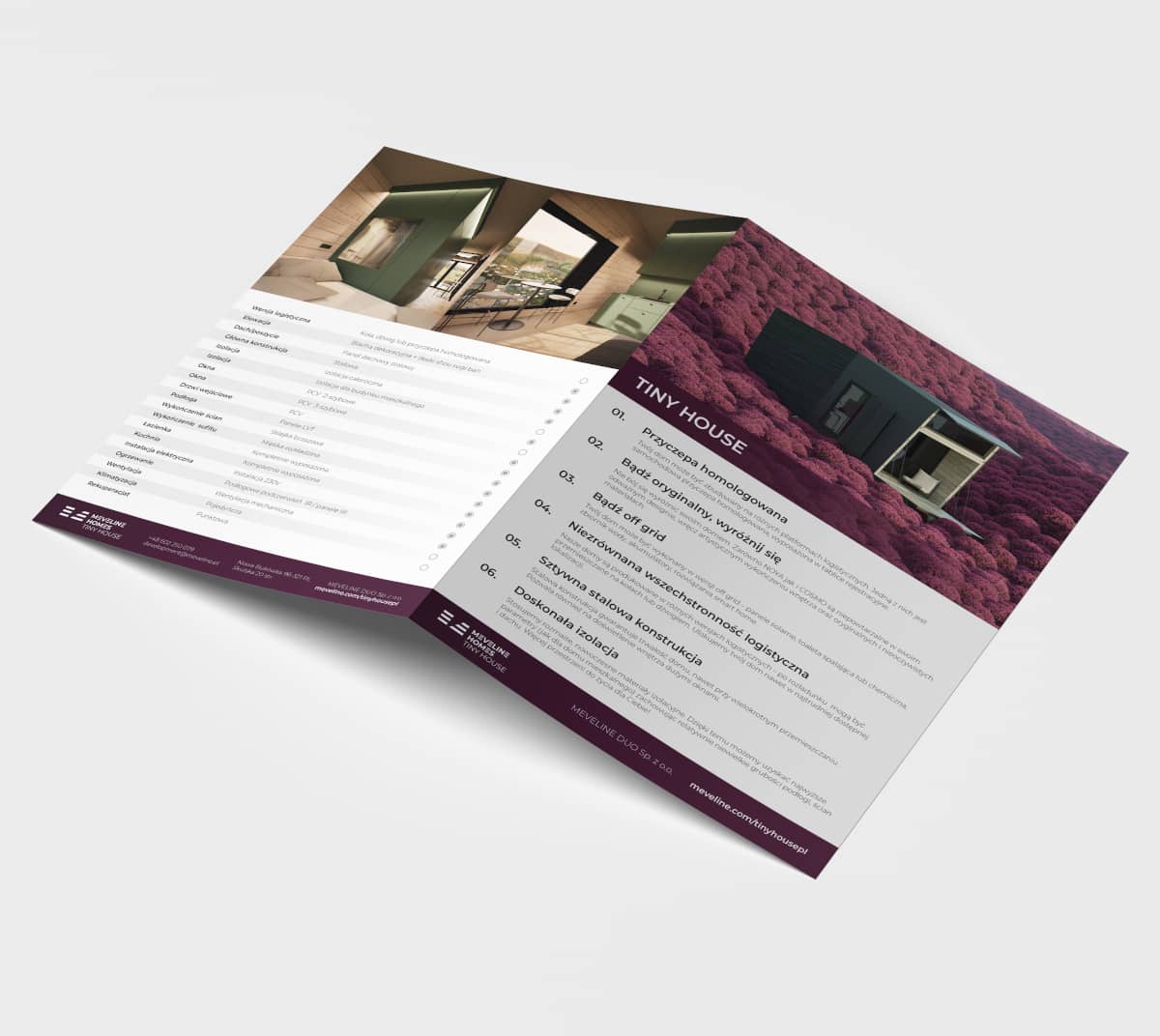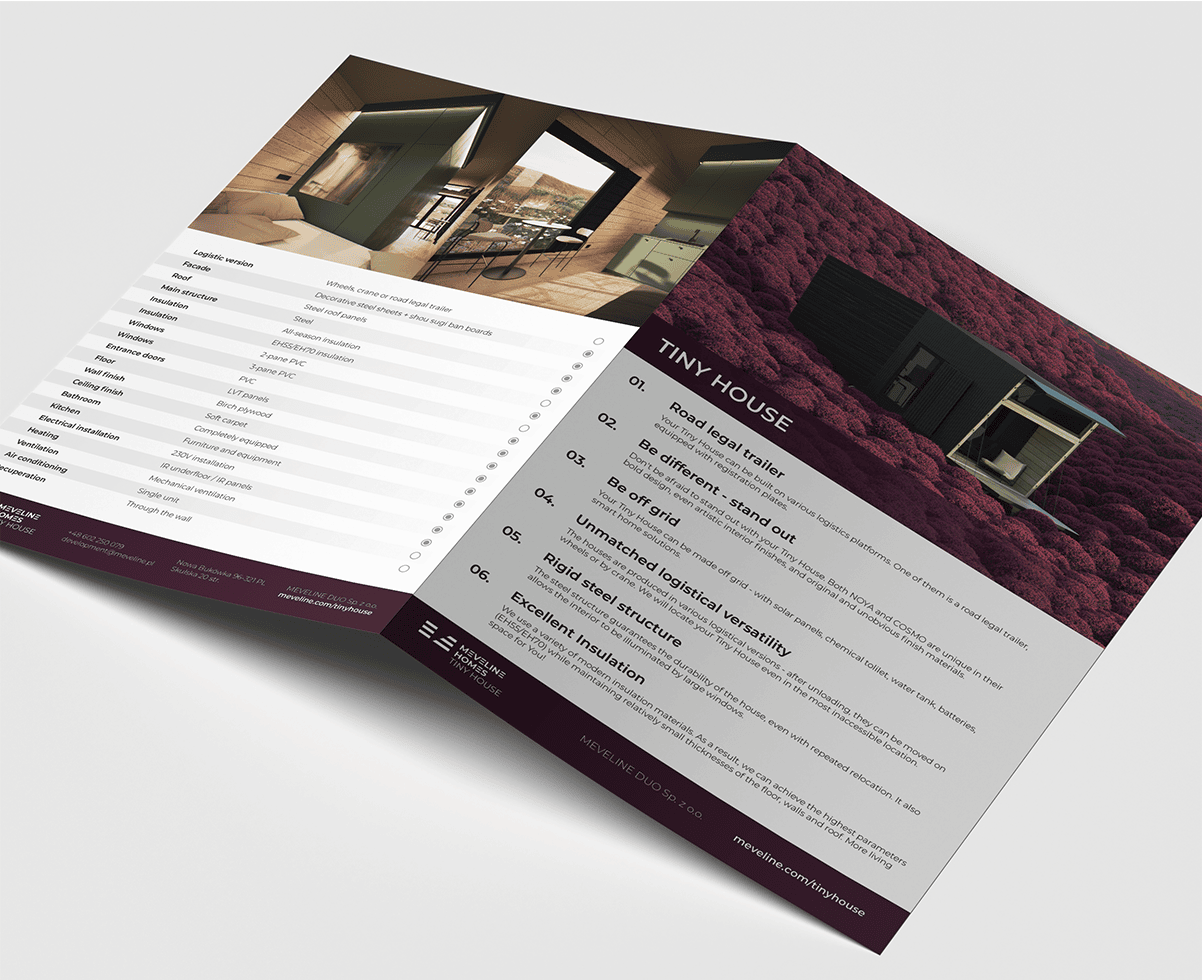



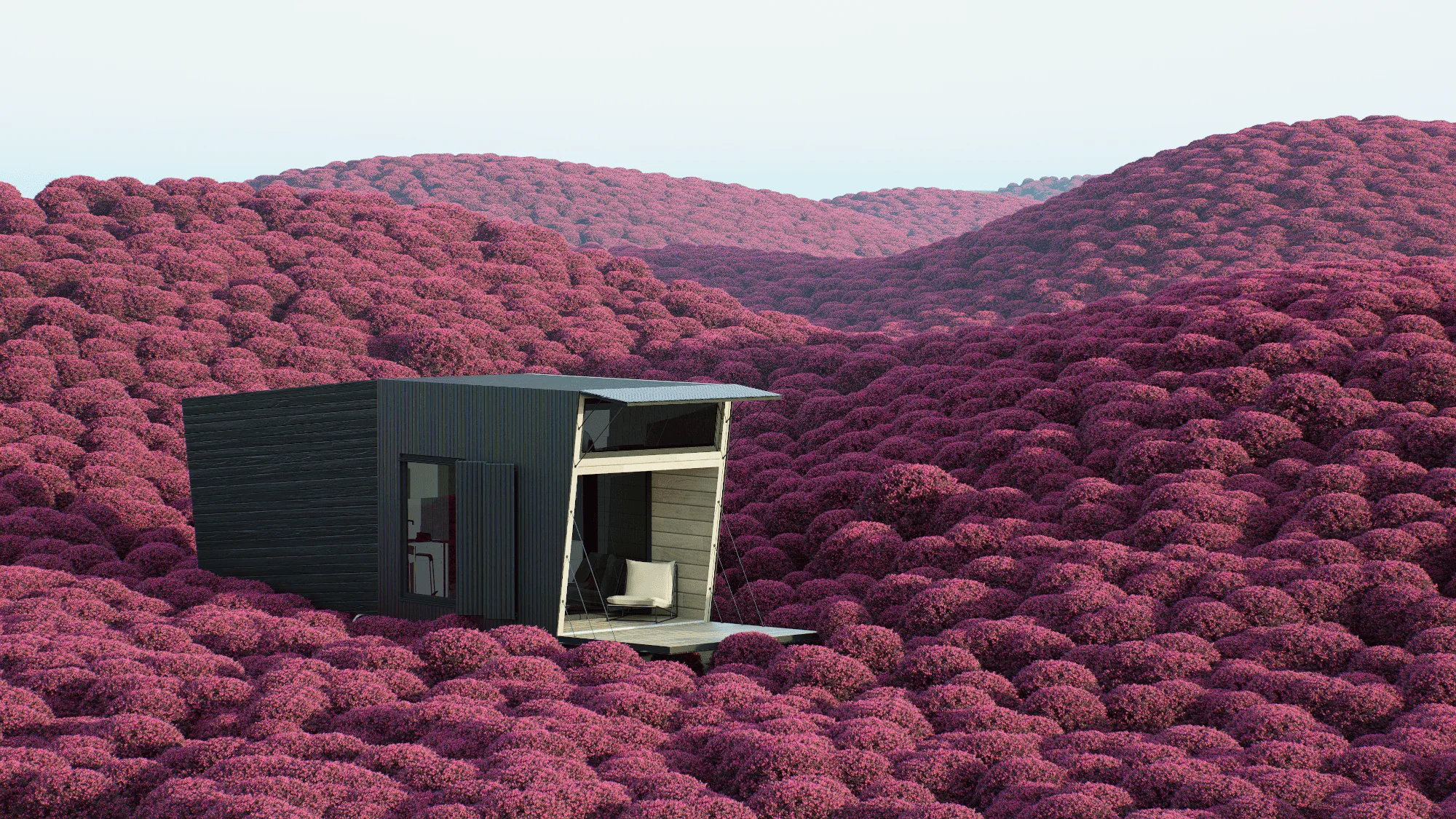
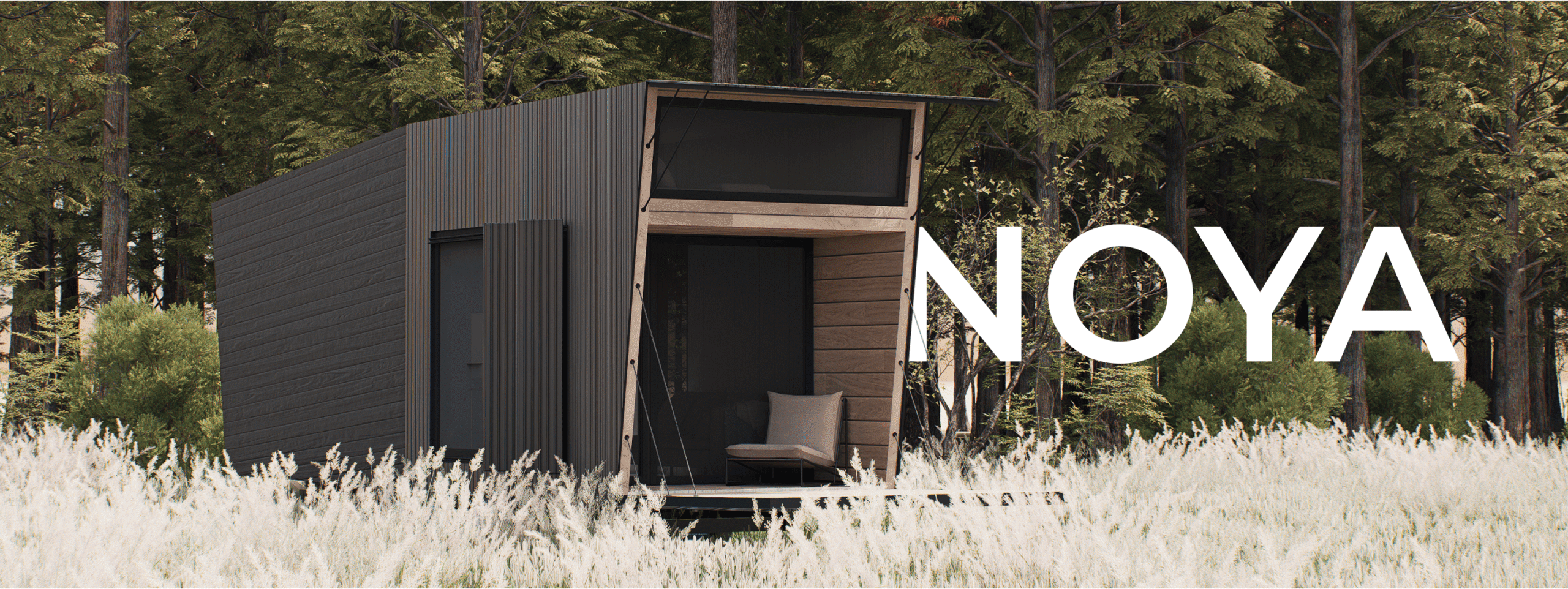
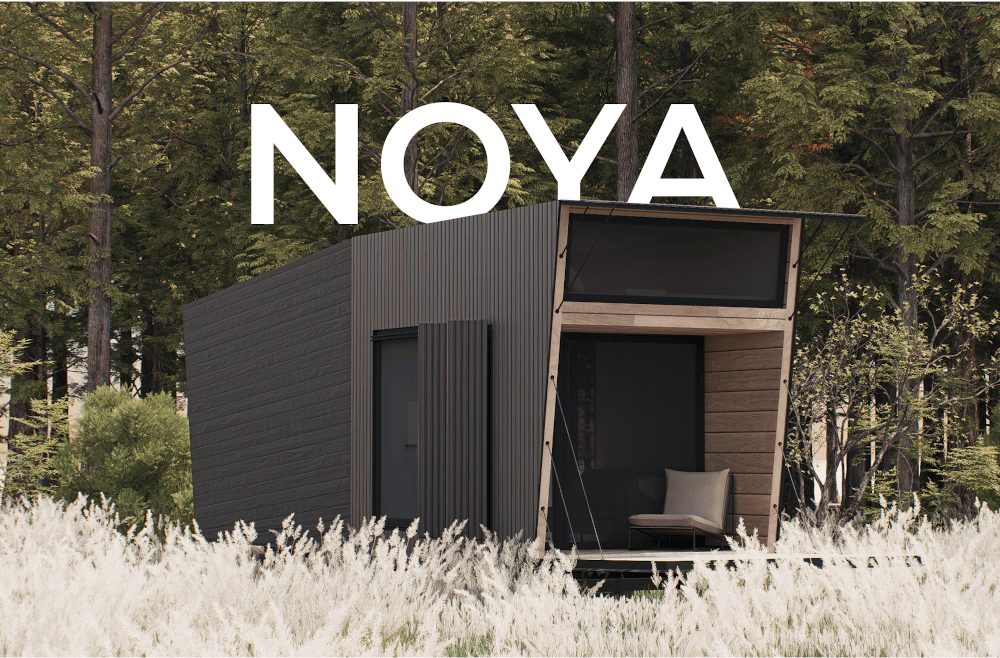
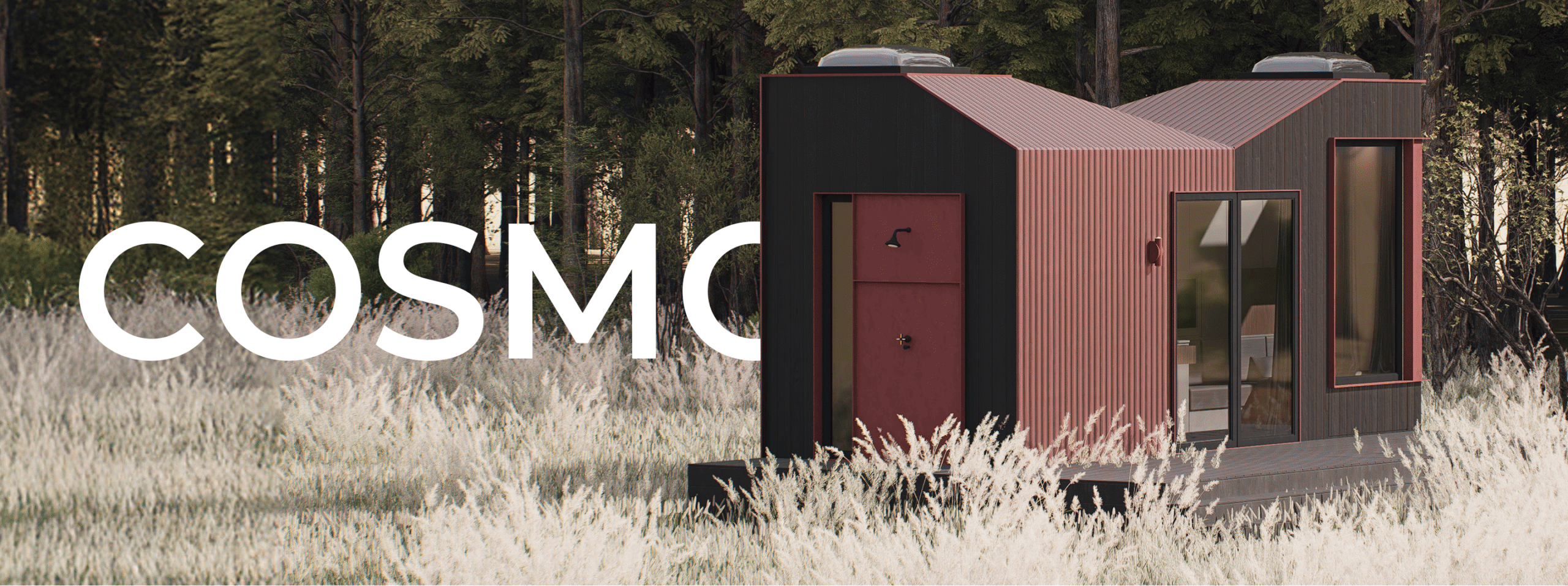
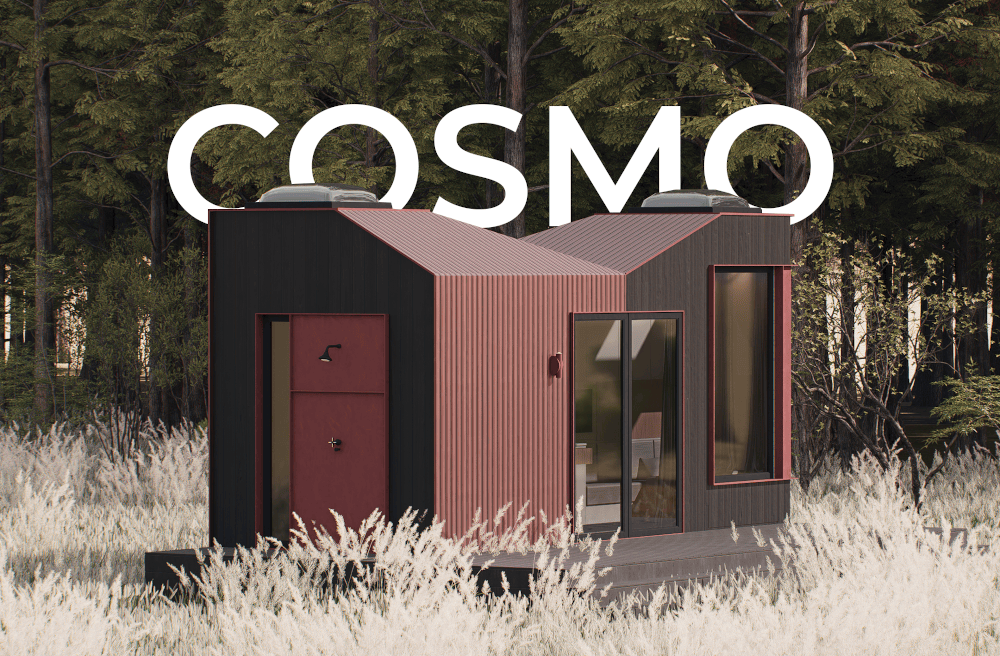
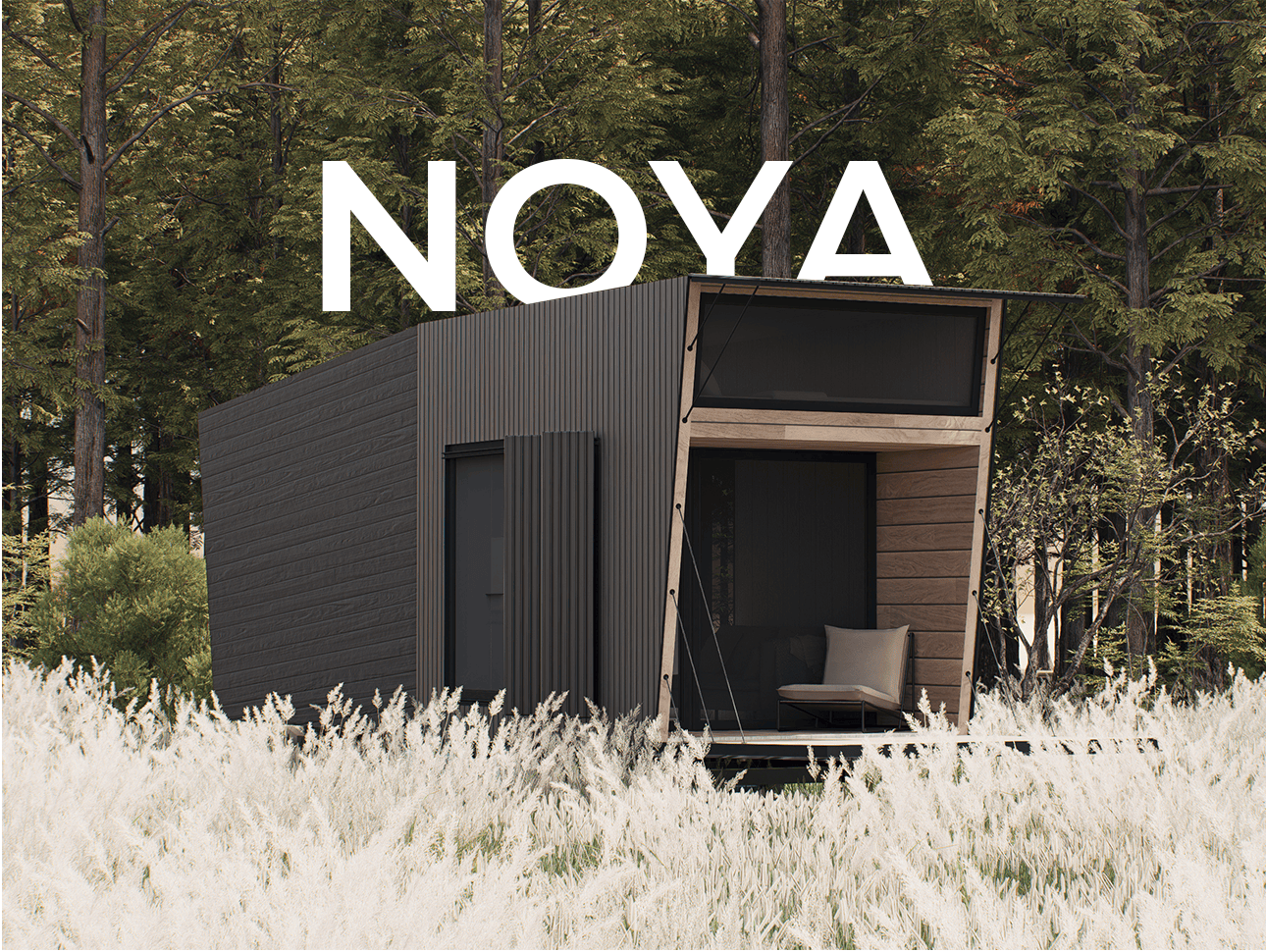
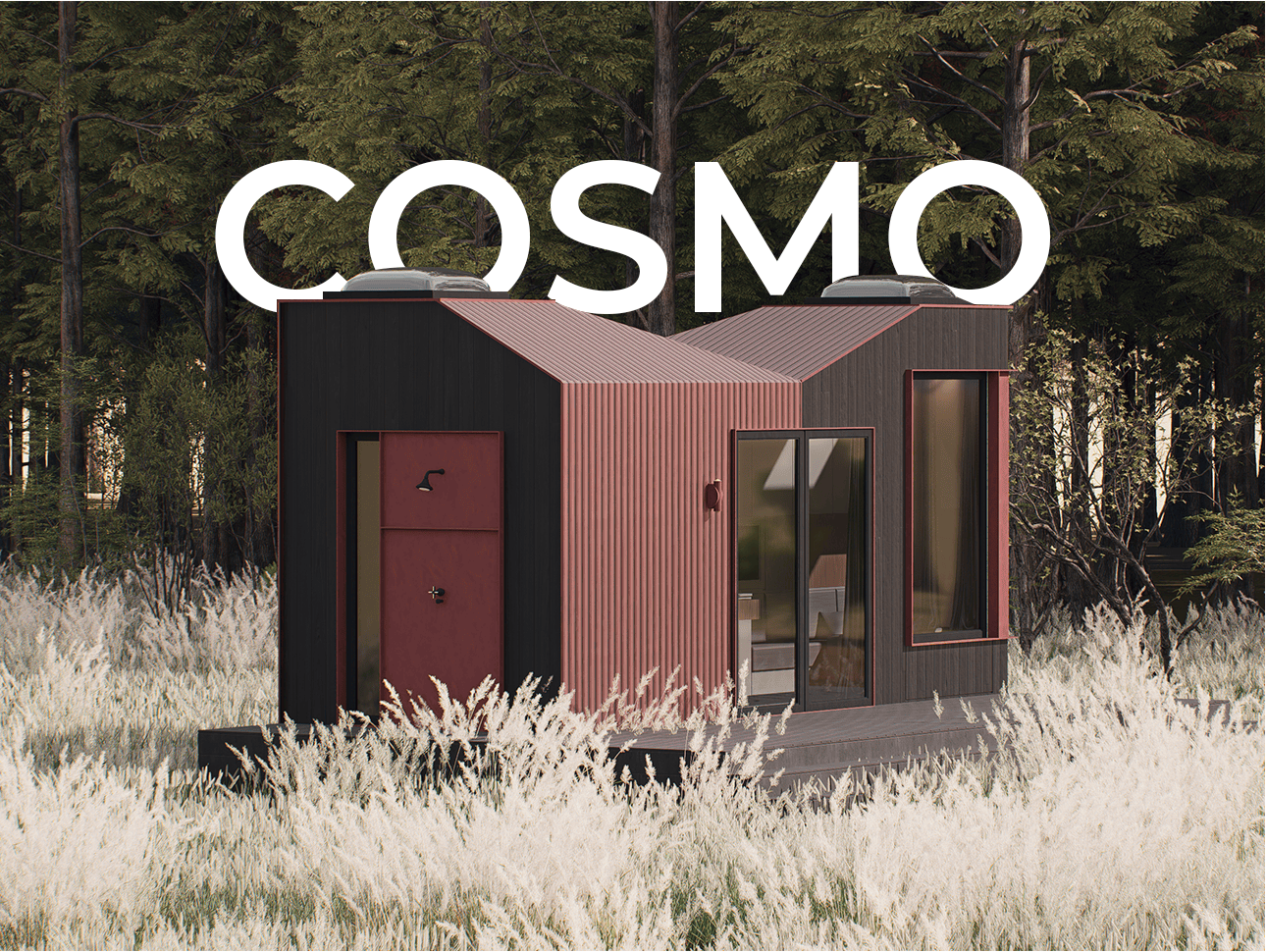
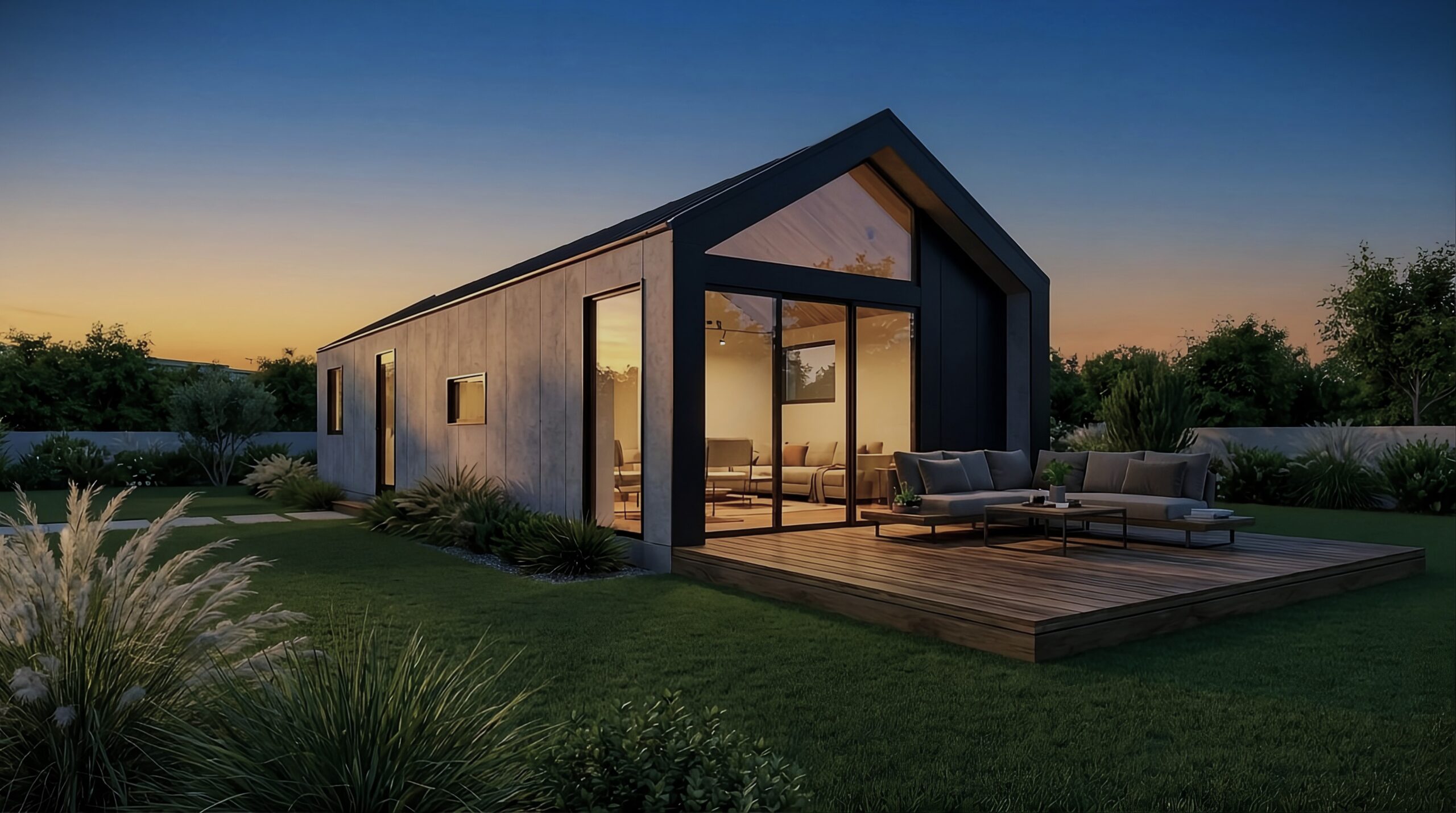
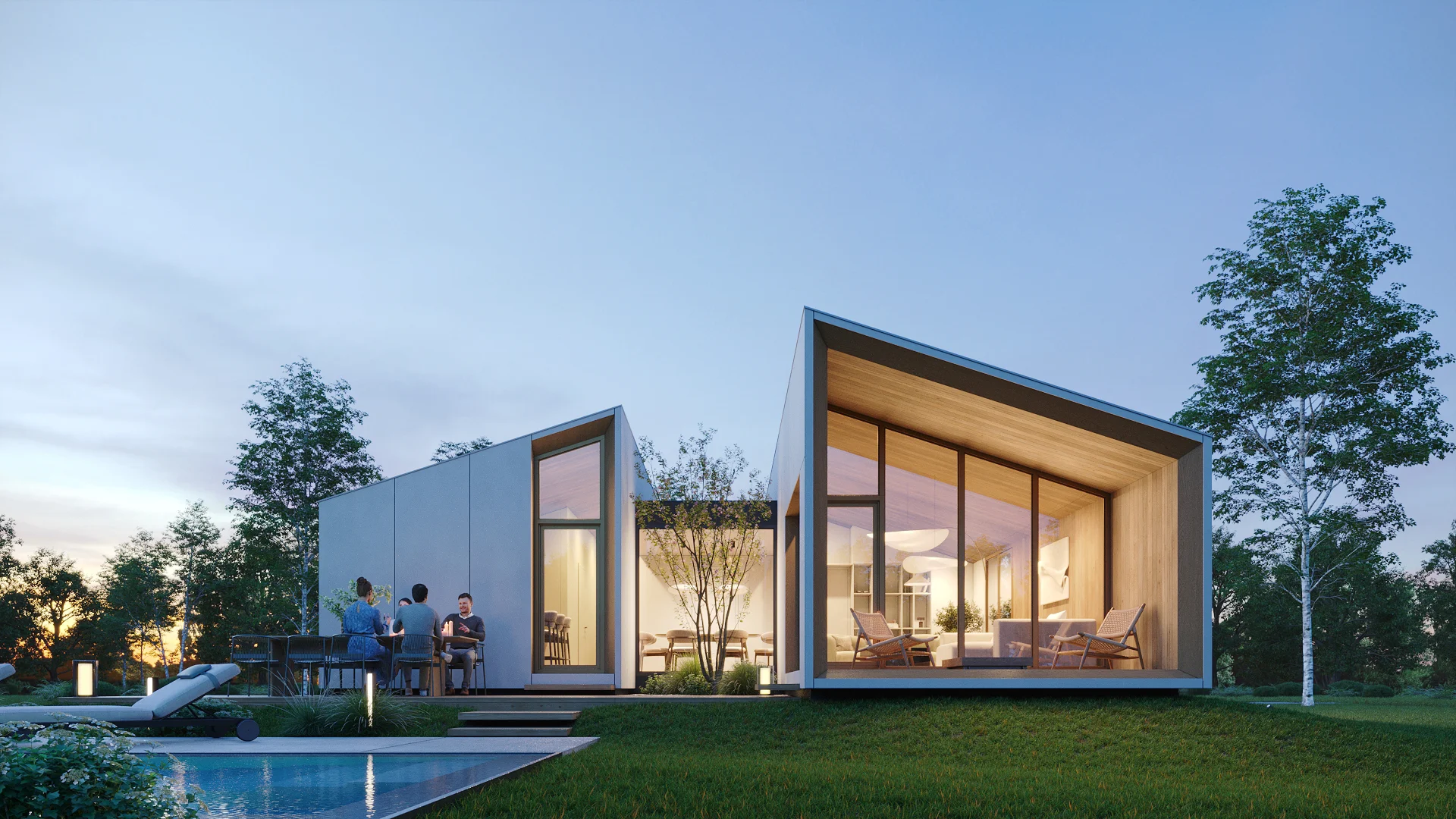
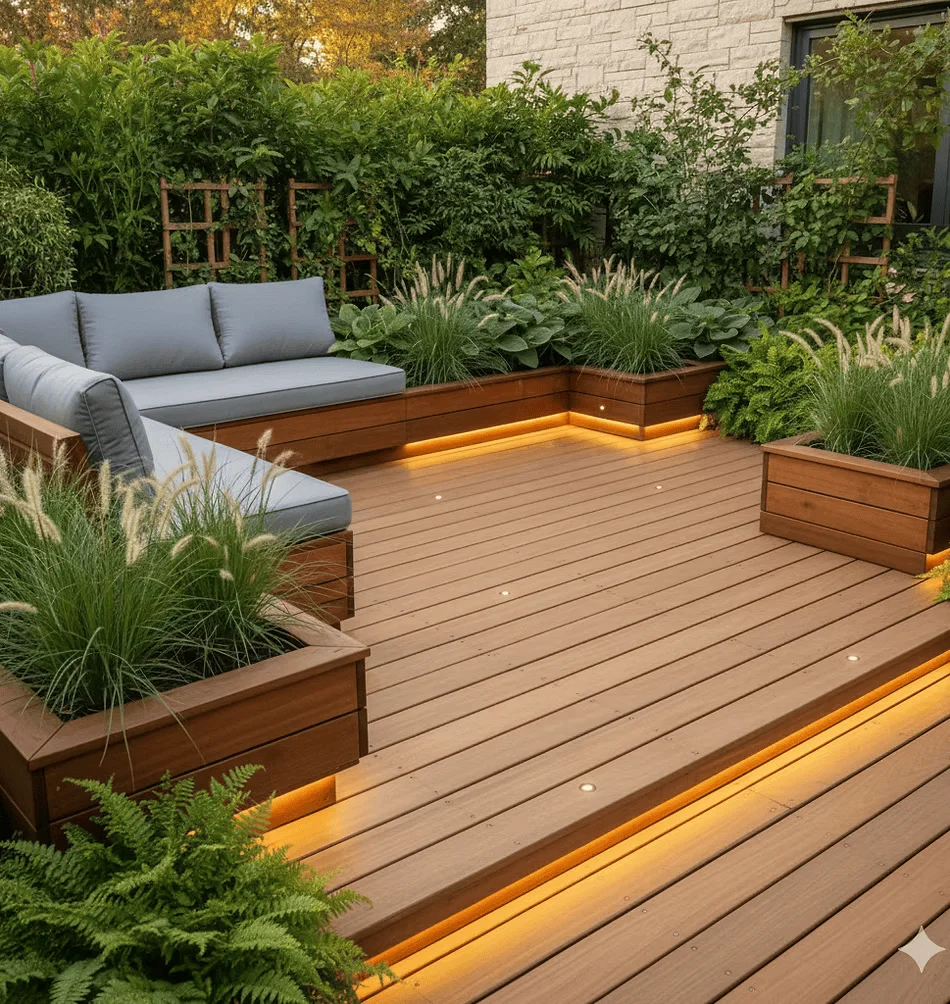
A Tiny House is a small, mobile home on wheels, typically measuring between 15 and 30 m². Its design focuses on making optimal use of space, making it an excellent solution for people who want to live economically and flexibly. It can serve a variety of purposes:
a holiday home,
an office,
a place to stay overnight.
Thanks to its mobility, it can be moved easily between different locations, giving users considerable freedom and independence when choosing a plot on which to place the house. By choosing a Tiny House built on a road-approved platform with a registration plate, the house may be placed on a wide range of plots, including sites where a conventional building may not be feasible for formal or legal reasons. Another advantage is the frequent integration of modern technologies that support self-sufficiency and allow comfortable living away from conventional municipal utility networks.
A Tiny House is a compact dwelling that promotes a minimalist lifestyle. Its main advantages are space efficiency and environmental responsibility. Ingenious solutions make it possible to use every part of the available floor area. These homes usually measure between 15 and 30 m², making them ideal for people who value simplicity and flexibility in the organisation of their living space. They can function as year-round homes, offices or holiday cottages. Their robust construction and high-quality materials also ensure durability and excellent thermal insulation, further improving everyday comfort.
The living area of a Tiny House is generally between 15 and 30 m². The interior is designed to use the available space as efficiently as possible while still providing all essential amenities, including a kitchen, bathroom and sleeping area. Despite its limited floor area, a Tiny House offers comfortable living conditions. Innovative architectural solutions make full use of the available space, increasing both comfort and functionality.
One of the greatest advantages of a Tiny House on wheels is its mobility. When mounted on a road-approved trailer, the house can be transported and relocated with relative ease. This enables owners to adapt their place of residence to changing needs and preferences. Mobile homes are particularly suitable for people who value independence and want to live in different locations without constructing a conventional property. Road transport provides considerable freedom when planning a relocation.
A Tiny House can be ready for occupancy immediately after delivery. These compact homes can be fitted with the necessary electrical and water and wastewater systems, enabling life away from municipal infrastructure. Modern sustainable solutions such as solar panels can provide renewable energy and greater independence. Most Tiny Houses include the everyday amenities required for comfortable living and can therefore be used as soon as they are installed.
A Tiny House is a versatile option that can serve many different users and purposes. Its compact construction and modern solutions make it suitable as a holiday home, rental unit, office or year-round residence for a couple or small family. Electrical and plumbing systems provide comfortable living conditions in a variety of settings.
their size and mobility make Tiny Houses ideal for living close to nature and in distinctive locations,
minimalist design makes interiors easier to organise and maintain,
they provide all essential amenities, including a kitchen, bathroom and sleeping areas,
solid construction ensures durability for many years.
The popularity of Tiny Houses continues to grow because they can be adapted to the needs of their occupants. Efficient use of space and modern insulation technologies make them suitable as year-round homes for small households, particularly singles and couples.
Holiday cottages, offices and guest accommodation in the Tiny House format are an excellent choice for people who value mobility and flexibility. Their compact dimensions allow relatively easy transport, making them suitable for both short stays and use as mobile offices. A Tiny House provides all essential amenities, such as a kitchen and bathroom, while offering greater independence and privacy than conventional hotel accommodation.
Tiny Houses are also well suited to short-term rental businesses, glamping developments and slow-living retreats. Their distinctive architecture, bold forms and memorable interiors can become an important attraction for prospective guests.
A year-round Tiny House can be an effective solution for a small family seeking compact dimensions without sacrificing essential functionality. High-performance insulation and modern technologies such as solar panels provide comfort throughout the year. Although the floor area is limited, the interior is planned to make maximum use of every available space.
the layout can accommodate a kitchen, bathroom and sleeping areas,
a strong steel structure ensures durability and stability,
the mobility of a Tiny House makes relocation between sites possible,
occupants can choose a location that reflects their preferences and changing needs.
Life in a Tiny House encourages owners to reduce their possessions to what is genuinely useful, which may contribute to greater satisfaction and lower stress. A smaller space naturally promotes more deliberate choices. Minimalism makes it possible to enjoy comfort without unnecessary distractions. It also means lower maintenance costs and less time spent cleaning and organising. The Tiny House philosophy is therefore well suited to people seeking a more conscious, environmentally responsible and uncomplicated way of life.
Tiny Houses are becoming increasingly popular for many reasons. Living in one can provide a closer connection with nature.
smaller homes require fewer resources to build and maintain, reducing their environmental impact,
when built on a road-approved trailer, they may be placed on sites that would be difficult to use for a conventional building because of formal or legal restrictions,
their mobility offers independence and the freedom to relocate as needs change.
Another major advantage is the low cost of ownership. A smaller interior generally means lower heating and electricity bills as well as less time required for cleaning. Efficient space planning keeps the home comfortable despite its compact size.
The minimalist lifestyle associated with Tiny Houses encourages people to remove unnecessary possessions and concentrate on what matters most. Together, these features make a Tiny House an attractive option for people who value simplicity and closeness to nature.
Living close to nature in a Tiny House is often supported by environmentally responsible solutions. Many units can be fitted with solar panels, enabling the use of renewable energy and more efficient management of energy and water. Tiny Houses may also use materials selected to reduce environmental impact and carbon emissions. Choosing this type of home promotes conscious consumption and minimalism, supporting a more sustainable way of living.
A Tiny House offers an opportunity to enjoy greater freedom and independence. These compact homes can be relocated and installed in different places without many of the complications associated with conventional real estate.
a practical choice for people seeking flexibility,
freedom to choose where to live,
the ability to adapt one’s lifestyle to individual needs,
access to a broad range of possible locations.
Low running costs are among the most important advantages of a Tiny House. Less space generally means lower heating and electricity expenses. Intelligent use of the interior also makes resources easier to manage. Energy-efficient materials and modern insulation provide year-round comfort while reducing operating costs, allowing owners to save money without giving up everyday convenience.
Efficient space planning is essential in a Tiny House. Thoughtful architecture gives every element a purpose and increases the functionality of the entire home. For example, stairs can incorporate storage cabinets, while folding furniture allows the interior to change according to the occupants’ needs.
Such intelligent solutions make it possible to create a comfortable living environment within only 15 to 30 m². This type of organisation supports convenience as well as a minimalist lifestyle by reducing unnecessary possessions and focusing on what is genuinely important.
MEVELINE Tiny Houses are based on welded steel-frame technology. This construction method provides durability and stability, both of which are essential to the building’s long service life. High-quality timber and finishing materials complement the structural system.
Thermal insulation plays a crucial role, ensuring comfortable internal temperatures throughout the year. Well-insulated walls and roofs limit heat loss in winter and overheating in summer, enabling a Tiny House to function as a year-round residence.
electrical and water systems are carefully designed to meet everyday needs while preserving the compact character of the interior,
these systems provide electricity and running water, significantly improving comfort,
airtight, energy-efficient windows support the building’s thermal performance,
the complete envelope protects occupants from changing weather conditions.
Together, these elements form a coherent and functional whole, providing a comfortable and environmentally responsible living environment away from urban noise.
Steel-frame technology forms the core of a Tiny House. The strong welded frame provides exceptional rigidity and allows the use of large windows that fill the interior with natural light. This robust structure also enables the house to be transported repeatedly without compromising its integrity.
Effective thermal insulation is fundamental to year-round comfort in a Tiny House. Modern solutions, including polyurethane foam, provide excellent protection against heat loss in winter and overheating in summer.
Well-insulated walls, roof and floor help maintain a stable indoor temperature. High-quality insulation also improves energy management and contributes to lower heating costs.
Effective insulation makes a Tiny House a comfortable place to stay regardless of the weather outside.
Electrical and plumbing installations are essential to the comfort and functionality of a Tiny House. They provide electricity and running water and may be configured according to the customer’s individual requirements.
electrical systems typically include energy-efficient LED lighting,
connections can be provided for a range of electrical appliances,
plumbing systems supply both hot and cold water,
water is available in both the kitchen and bathroom,
integrating these systems significantly improves everyday convenience,
off-grid variants can provide independence where basic utilities are unavailable.
Windows and steel entrance doors play an important role in a Tiny House. In addition to contributing to its appearance, they provide security and weather protection. High-quality windows bring natural light into the compact interior. Proper sealing improves thermal insulation and supports year-round comfort.
Durable entrance doors protect the interior against adverse weather and external threats. The quality of both windows and doors helps make a Tiny House a safe and reliable place to live.
Carefully planned joinery is an investment in the durability of the building and the comfort of its occupants, which is why it is a key part of the design process.
Contemporary Tiny Houses use innovative systems designed to improve quality of life and everyday comfort. A clean drinking-water supply is especially important. Different toilet systems may also be installed:
conventional toilets,
incinerating toilets,
composting toilets.
The appropriate option depends on the owner’s preferences and the conditions at the installation site.
Air conditioning with a heating function further improves comfort. Energy-efficient technology makes it possible to maintain a pleasant temperature throughout the year while limiting energy consumption. Energy efficiency also extends to lighting and other electrical systems, helping reduce operating costs.
A preventive security system can protect both occupants and their property. These technologies make a Tiny House not only practical and comfortable, but also more environmentally responsible.
Clean-water and wastewater systems in a Tiny House improve comfort while supporting environmentally responsible resource management. They ensure access to drinking water and enable efficient control of water use and wastewater disposal, an important consideration for people pursuing the sustainable lifestyle associated with Tiny Houses.
Water-saving technologies may include grey-water recycling systems, which reduce the consumption of natural resources. These solutions can provide a high level of comfort even without a permanent connection to municipal utilities, increasing both functionality and sustainability.
A Tiny House can be equipped with several types of toilet:
a conventional toilet requires a permanent connection to a wastewater system, which may be impractical for a mobile home,
an incinerating toilet eliminates the need for water and sewerage by burning waste, although it requires an energy source,
a composting toilet converts waste into compost and can provide an environmentally responsible and economical solution.
Some systems operate without water, minimise odours and have a lower environmental impact. Each type has specific installation and maintenance requirements that should be considered when selecting the most suitable option.
Air conditioning can significantly improve comfort in a Tiny House. Modern units are efficient and economical to operate, while systems with a heating function can maintain a comfortable temperature throughout the year.
Energy-efficient solutions are central to Tiny House design and may include:
LED lighting,
high-performance thermal insulation,
integrated systems that improve the energy performance of the entire building.
These measures can substantially reduce electricity and heating costs.
Modern technologies improve everyday comfort while making the house more environmentally responsible. They can also support independent operation without a permanent connection to municipal infrastructure, increasing flexibility of use.
Security systems play an important role in protecting Tiny House occupants and their property. Because these buildings are mobile and may be placed in remote locations, theft prevention and hazard detection are particularly important. Modern solutions such as monitoring cameras and intruder alarms can significantly improve security.
Smart security systems can be integrated with building-management technology, allowing owners to monitor and control the house remotely using a smartphone. This provides reassurance when the property is unoccupied or installed in a less protected location.
When selecting a security system, it is worth considering:
compatibility with other technologies used in the house,
the possibility of adding further functions,
motion sensors,
smoke detectors,
options tailored to the owner’s requirements and the specific location of the house.
A Tiny House can be transported on a purpose-built trailer, greatly simplifying relocation. At the destination, the house is placed on stabilising supports that ensure safety and stability. Road transport allows owners to adapt the location of the house to their needs. Before the journey, the building is secured properly to prevent damage. Trailer approval confirms compliance with technical standards and road regulations. At the site, the house must be positioned precisely and levelled using specialist supports. Because the internal systems are prepared in advance, the house can be used immediately after installation.
The ordering process includes:
design personalisation according to the customer’s preferences,
rapid preparation and manufacture of the complete structure,
a typical production period of no more than approximately 2.5 months from contract signing.
This enables buyers to begin using their new accommodation soon after delivery.
A road-approved trailer is central to the transport of a Tiny House because it helps ensure that the journey is legal and safe. Approval confirms that the vehicle complies with applicable technical and legal requirements. Correct matching of the trailer and house also maintains structural stability during transport and reduces the risk of mechanical damage.
Road transport makes a Tiny House easy to relocate, which is one of its defining advantages. When mounted on a road-approved trailer, the house can be moved between locations without major difficulty. This mobility allows owners to adapt their place of residence or business to changing needs and preferences while transporting the unit in accordance with applicable road regulations.
Investing in a Tiny House can be attractive for several reasons. These buildings offer considerable operational flexibility, allowing them to be adapted to different uses and locations. Their function can therefore change in response to market demand or the owner’s own plans.
Tiny Houses can also support sustainable development. Modern technologies and environmentally responsible materials help reduce environmental impact as well as operating costs, making the investment both financially and ethically attractive.
Low maintenance costs and the possibility of rental or resale can provide an attractive return on investment. A Tiny House may serve as holiday accommodation, a workspace or tourist lodging, creating opportunities for recurring revenue.
Purchase prices may start at approximately PLN 100,000 and rise according to personalisation and additional equipment. Transport and site-preparation costs should also be considered. Despite these expenses, the growing popularity and broad range of applications give Tiny Houses significant investment potential.
Investing in a Tiny House can create an opportunity for stable returns. Demand for compact, modern and environmentally responsible accommodation continues to grow, making rental or resale increasingly attractive. Low running costs and the ability to generate passive income can strengthen the financial case.
interest in minimalist lifestyles continues to grow,
this trend increases demand for compact accommodation,
as a result, a Tiny House may represent a resilient long-term investment.
In the context of a Tiny House, sustainable development means supporting environmentally responsible solutions and reducing the building’s impact on natural resources. Materials can be selected for lower environmental impact, while technologies such as solar panels enable the use of renewable energy. A Tiny House can therefore combine long-term sustainability goals with comfortable living close to nature.
Tiny House investment is becoming increasingly attractive as the popularity of compact homes and minimalist lifestyles grows. Rising demand may support market value.
A Tiny House may also be used as:
guest accommodation,
office space,
a rental asset capable of generating regular income.
Low running costs and flexible use can allow the initial expenditure to be recovered more quickly. Tiny Houses are therefore an interesting option for investors seeking stable and efficient use of capital.
Tiny Houses offer exceptional operational flexibility and can be adapted to different needs and locations. Owners may personalise both the interior and exterior, relocate the building and modify its use in response to market conditions or personal circumstances. This makes a Tiny House attractive to people who value independence and are open to new opportunities.
Tiny Houses are becoming increasingly popular in Poland as interest grows in compact, environmentally responsible homes. The market now offers a wider selection of completed units and custom construction projects for people seeking comfort and a close connection with nature.
The increasing number of sales listings indicates growing demand. Tiny House designs can often be adapted to individual customer requirements, enabling owners to create a distinctive living environment.
Many people value the opportunity to live closer to nature and to follow minimalist, more sustainable principles. These qualities can improve everyday quality of life.
The Tiny House market in Poland is developing rapidly, as reflected in the growing number of listings. Customers can compare models and prices across a range of platforms and choose homes with different:
dimensions,
finishing styles,
equipment levels.
Listings usually include detailed descriptions and photographs to support purchasing decisions. Many suppliers also offer project customisation, allowing the living space to be tailored to the owner. Sales platforms make it easier to contact suppliers and negotiate purchase terms.
Interest continues to rise, and the market is becoming increasingly attractive to people seeking modern and environmentally responsible housing solutions.
Tiny House design and construction are becoming increasingly popular in Poland. Specialist companies provide comprehensive services and adapt projects to the requirements of individual customers.
Construction commonly uses welded steel-frame technology, providing strength and durability. Customers can choose from a range of layouts, interior arrangements and finishing materials.
Personalised projects make it possible to create a space suited to the owner’s lifestyle. Electrical and plumbing installations can be included during production to improve convenience.
Tiny Houses are highly versatile,
they can function as year-round homes,
they can be used as holiday cottages,
they can serve as mobile offices,
this versatility makes them attractive to people who value modern design and an environmentally responsible lifestyle.
Tiny House owners appreciate the distinctive experience of living in a compact space and concentrating on their most important needs. Comfort and practicality are central to purchasing decisions. A Tiny House enables close contact with nature and a minimalist way of life, attracting people in search of balance and tranquillity.
Customers expect excellent workmanship that ensures durability and comfort. The ability to tailor a project to personal preferences further increases satisfaction with the investment.
Owners frequently emphasise the freedom and independence associated with a small home, particularly when it is surrounded by nature. Close contact with the natural environment can support well-being and quality of life. A Tiny House makes nature part of everyday experience, encourages relaxation and may reduce stress. Owners also value the simplicity and harmony promoted by minimalist living.